Smart Home / Buying guide
Before you buy your first smart plug
Check electrical ratings, connectivity and useful routines before adding an outlet to your smart home.
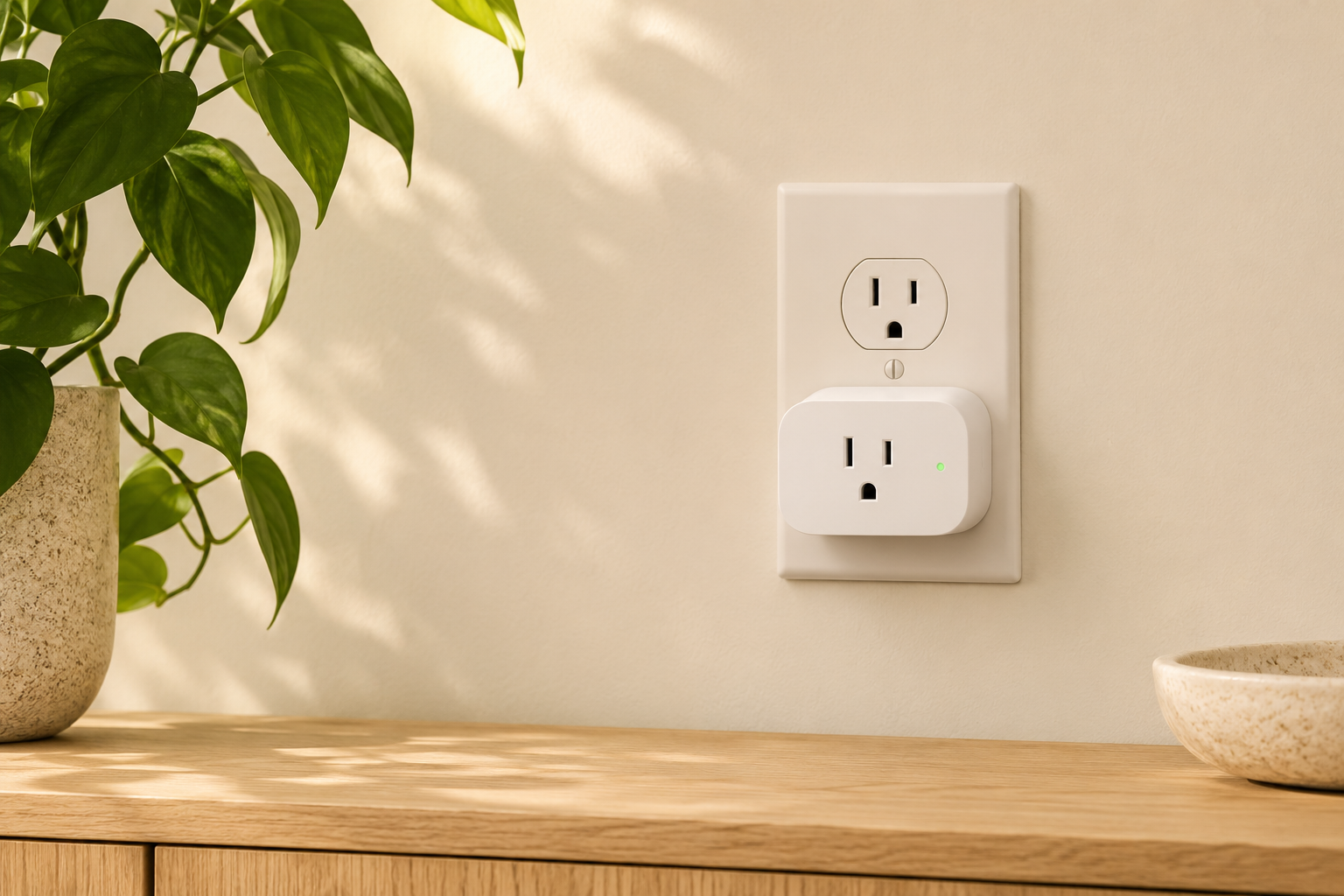
Begin with a useful routine
A lamp that turns off at bedtime is a clearer starting point than automating every appliance. Decide whether you need a schedule, remote access or voice control. Then check that those functions work with the platform you already use.
Check electrical compatibility
Match the plug to your country, socket type and the load specified by the manufacturer. Do not assume a plug is suitable for heaters, high-power appliances or medical equipment. Follow both the plug and appliance instructions.
Understand the network requirements
Check Wi-Fi frequency requirements and whether a hub or border router is needed. Some schedules run locally while other functions depend on cloud services. Confirm what continues to work during an internet outage before relying on a routine.
Make account security part of setup
Use a unique password, install manufacturer updates and review account permissions. A physical on/off button is helpful for shared households. Check reset instructions and how to remove the device from an account before passing it to someone else.
Potential advantages
- Schedules can make simple lighting routines convenient.
- A physical switch provides a useful fallback.
Trade-offs
- Compatibility varies between platforms.
- Cloud-dependent functions may stop during an outage.
Who this guide suits
Households starting with a simple, compatible lighting routine.
The takeaway
Start with your actual routine, check compatibility and compare the details that affect everyday use. Confirm current specifications, availability and seller conditions for the exact model before purchasing.
Related reading
 Audio / Buying guide
How to choose headphones for everyday listening
Comfort, connection and noise control: a practical checklist for finding your next pair.
 Computing / Buying guide
A practical laptop checklist for work and study
Find a sensible balance of portability, screen quality, memory and the ports you actually use.